Are Solar Surface Pumps Cost-Effective Compared to Conventional Water Pumps?
Date
Category
Knowledge
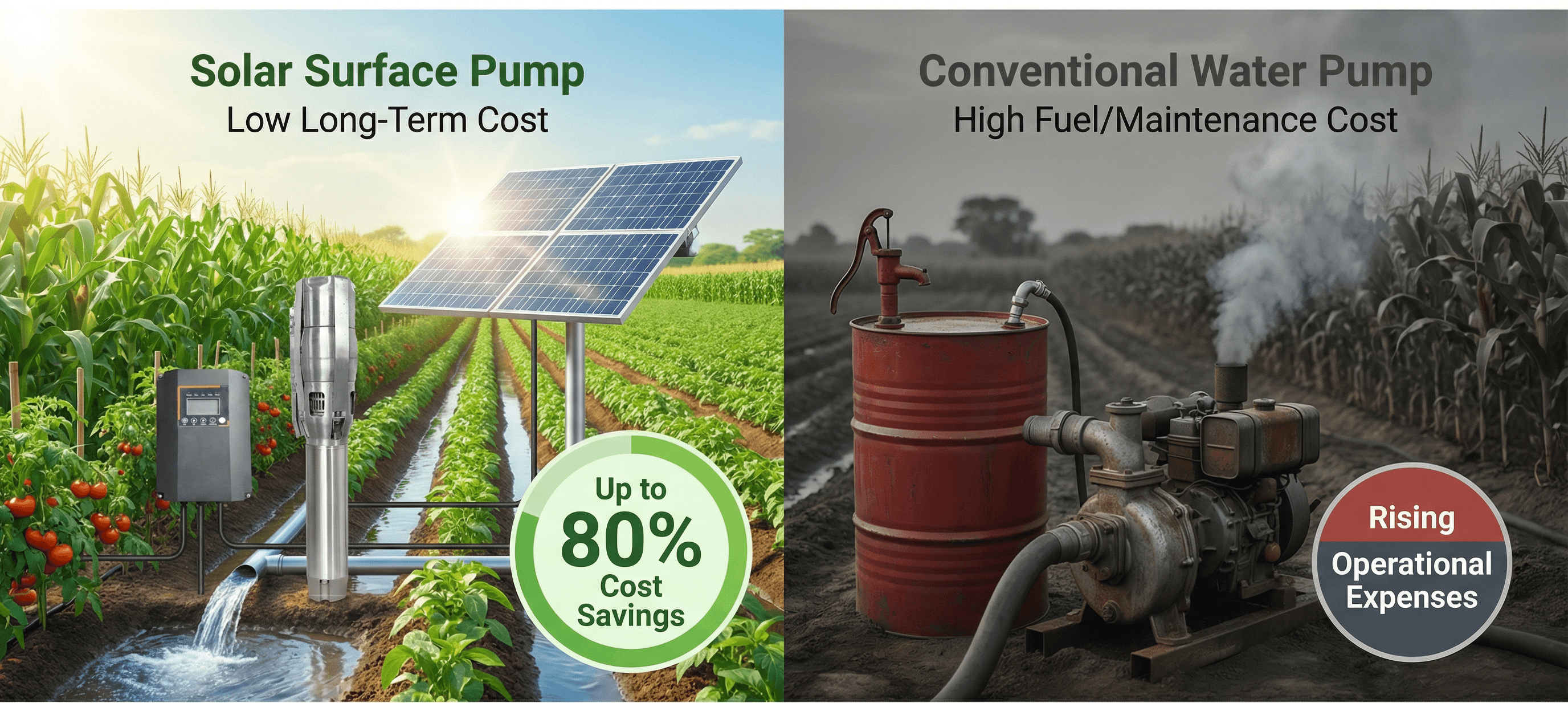
When it comes to water pumping, cost is the deciding factor for most users. Farmers, rural communities, and industries often ask whether switching to solar surface pumps actually saves money compared to traditional electric or diesel models. The short answer is yes—but understanding how they’re cost-effective requires looking beyond the purchase price.
How Solar Pumps Pay for Themselves Over Time
Conventional water pumps generally have lower upfront costs. They connect directly to grid power or diesel engines and start working immediately. However, that low entry cost quickly grows through monthly electricity bills, fuel purchases, and recurring maintenance.
The SAMKING solar surface pump has a higher initial cost due to its solar panels, mounting structures, and controller. Yet once installed, it operates entirely on free solar energy. Over time, the absence of fuel or electricity expenses makes solar systems far more economical.
A typical solar surface pump can pay for itself within two to three years of operation — after that, every drop of water it moves is practically free.
Advance Solar Surface Pumps for Energy Savings
Solar surface pumps use MPPT controllers that optimize power conversion from sunlight to motor output. This ensures maximum energy utilization and maintains steady performance even during fluctuating sunlight.
In contrast, grid-powered pumps consume energy at a fixed rate regardless of load, wasting electricity during low-demand hours. Diesel pumps lose efficiency as engines wear out, and fluctuations in fuel prices further increase costs.
With SAMKING,s solar surface pump systems, energy from the sun is converted directly into useful hydraulic power, resulting in up to 30% higher operational efficiency than conventional alternatives.
How to Maintain Your Solar Water Pump for Longer Lifespan
Diesel engines require oil changes, filters, and frequent servicing. Electric pumps are subject to voltage fluctuations that can damage coils and capacitors. Solar pumps, especially those built with brushless DC motors like SAMKING's, have fewer moving parts and lower mechanical wear. They need only periodic cleaning of solar panels and inspection of connections. The result is minimal downtime and lower maintenance expenditure across 10–15 years of use.
Energy Independence for Farmers Using Solar Water Pumps
In areas with unreliable power supply, farmers often depend on diesel to keep irrigation systems running. This makes them vulnerable to fuel shortages and high operating costs. A solar surface pump eliminates that dependence.
With hybrid solar controllers, users can switch between solar and grid power as needed. This flexibility ensures constant water availability with zero interruption, turning a one-time investment into a sustainable, cost-controlled asset.
Long-Term Benefits of Choosing a Solar Surface Pump
While traditional pumps appear cheaper at first, solar surface pumps deliver years of operation without ongoing expenses. The difference becomes clear when you calculate total ownership costs over a decade.
By choosing a SAMKING solar surface pump, users gain stable water access, long-term savings, and protection from rising energy costs. It is not just a pumping solution. It is an investment in financial and environmental efficiency that keeps paying back for years.
Relevant Models

3SPN1-12P
100m Head Solar Pump for Irrigation and Deep Well Use

4SPN5-15
3000W/4.02Hp 1.5 Inch Solar Submersible Water Well Pump for Rural Irrigation

3SPN2-11
1200W / 1.61Hp 1.25 Inches Automatic Solar Submersible Water Pump Control for Irrigation

3spn1-5p
300W/0.40Hp 1.5 Inches Stainless Steel Deep Well Solar Submersible Pumps
More Newscases